DigiTera › Blog › Instagram Marketing
DigiTera Blog • Instagram MarketingHow to Get More Customers from Instagram (2026): Turn Followers into Enquiries
If you want to know how to get more customers from Instagram, stop counting followers. Followers are not customers. This guide gives you a five-step system — a profile that sells, content people send, free testing with Trial Reels, replies inside five minutes, and a WhatsApp close — that turns Instagram attention into paying customers.
Most small businesses on Instagram have the same problem, and it is not a lack of posting. They post every day, the views come in, and the phone stays quiet — because attention only becomes an enquiry when the profile sells, the content is worth sending, and every message gets a fast reply. Here is the system, step by step.
Why your Instagram followers aren't becoming customers
Before you fix anything, find the leak.
Leak 1: the profile reads like a business card, not a landing page. A visitor arrives, sees a vague bio, finds no service, no area, no next step — and leaves. You have three seconds: what do you do, and what next?
Leak 2: the content is made to be liked, not sent. Likes feel good, but they do not bring customers. In 2026 Instagram ranks what gets sent — a Reel forwarded in a DM is a signal to show it to more people. Mosseri names DM shares a top-three ranking signal.
Leak 3: the reply is slow — or never comes. The average small business takes more than 10 hours to answer an Instagram DM (LeadResponse, October 2026). By then the customer has messaged your competitor. Step 5 fixes this.
Step 1: Turn your profile into a landing page
Your profile is a landing page, not a business card. Four fixes, five minutes each.
Make the name searchable. Instagram search reads the name field, not just the username. "Amina's Salon" tells the app nothing; "Amina's Salon — Hair & Bridal, Lahore" tells it exactly who to show you to.
Write a bio that says who it is for and what happens next. One line for the customer, one of proof ("400+ brides, 4.9★"), one for the next step ("Tap below to book on WhatsApp").
One link, one next step. Link to a page that lets someone act — a WhatsApp chat, a booking page, a short form. Not a link tree with nine options.
Use highlights as proof. Pin four covers: results, process, reviews (with permission), and how to book. A new visitor checks highlights like a buyer checks reviews.

Step 2: Post content people SEND, not just like
The shift that matters most in 2026: Instagram rewards content that gets sent. Before you film anything, ask: would someone send this to another person? If not, the idea is not ready.
What gets sent is specific: a plumber's clip about a leaking tap gets sent to a spouse; a salon transformation to a sister; a price breakdown to a friend who asked "how much?"
Three November 2026 changes raise the stakes. First, the repost penalty: Instagram is extending its crackdown on unoriginal content to photos and carousels (Kicks Digital Marketing, 2 November 2026). Second, Instagram's "Your Algorithm" controls (October 2026) let people tune what they see. Third, the numbers: Reels engagement is up 24.76% in 2026 (Metricool), carousels edge Reels at 0.50% vs 0.48%, and 30–60 second Reels have the highest reach at 5.60% (Socialinsider, October 2026). See Webeesocial and the mean.ceo round-up.

Step 3: The 5 reel formats that actually bring enquiries
The heart of the system — how to make reels that sell. Five formats do almost all of the work.
1. The transformation / result reveal. Before → after, messy → finished, problem → solved. Caption: "Comment BOOK and we will send you the price list."
2. Behind the process. Hands at work, tools, the middle of the job. People trust what they can see being done.
3. The practical tip. One useful thing, in under 30 seconds. "Three signs your AC needs a service before winter." Tips get saved and sent.
4. The customer story. A real customer saying what changed. Thirty seconds, one question: "What was the problem, and what happened after?" Ask permission first, always.
5. The direct answer. Take the question customers ask you most and answer it on camera in 20 seconds. Put the question on screen.
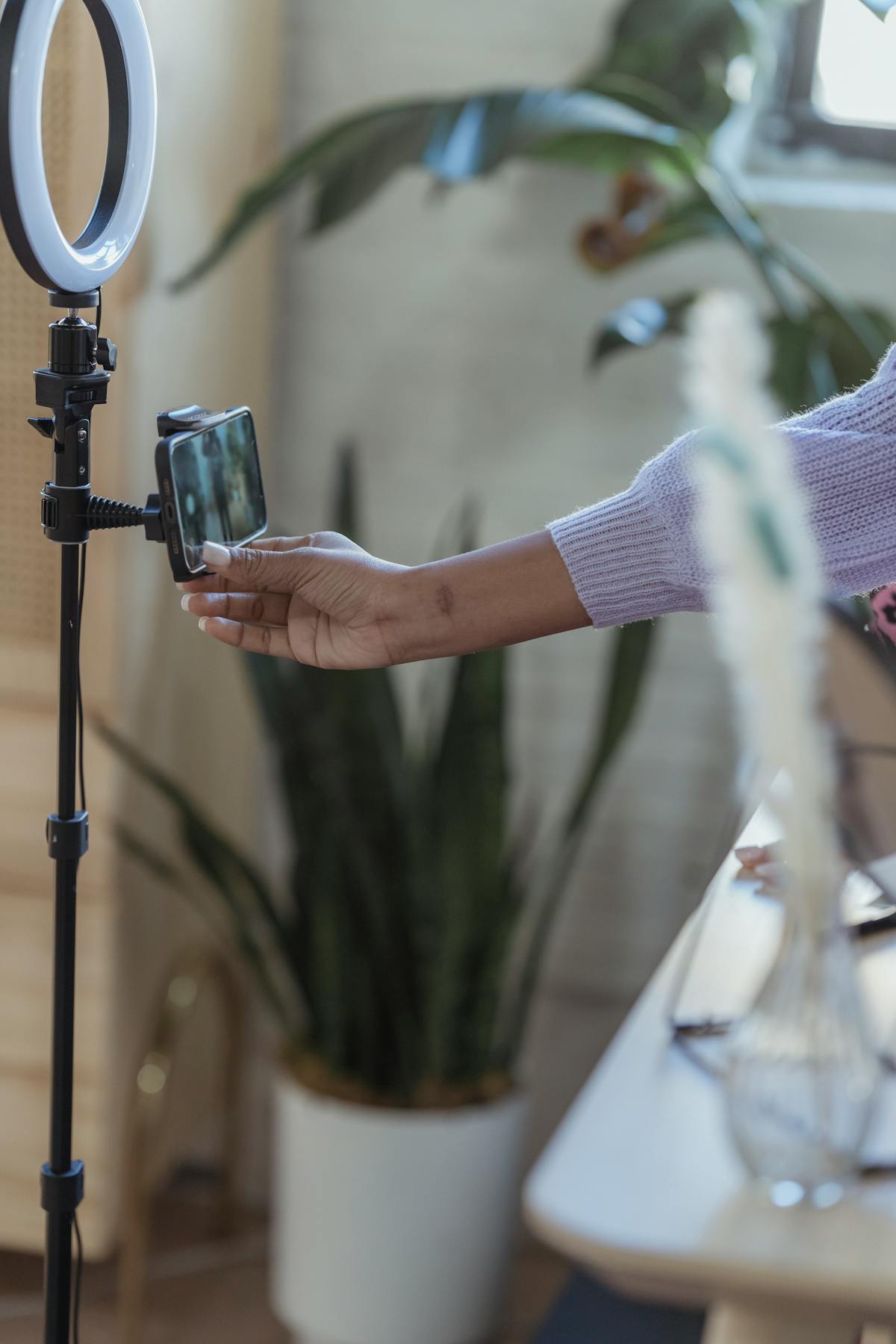
Every format follows the same shape: hook, one idea, on-screen text, one clear next step. See the video editing mistakes that kill a reel in 3 seconds.
Worked example: a 30-second Reel script (illustrative)
The business below is fictional — a made-up plumbing business. It is not a real DigiTera client.
0–2s — Hook, on camera
"Your tap keeps leaking after a repair? Here is why — and it takes 20 seconds to check."
2–10s — Show the problem
Close-up of hands under a sink, pointing at a worn washer. On-screen text: "This small part is the culprit."
10–22s — Show the fix
Hands replace the washer, tap runs clean. On-screen text: "New washer. No drip. Two minutes."
22–30s — Next step
Owner to camera: "If your tap does this, comment LEAK and I will tell you what it costs to fix. Lahore only."
One problem, one fix, one next step.
Step 4: Test it free with Trial Reels
Guessing which Reel will work is expensive. Testing is free. Trial Reels show your clip to non-followers first, to test it, before it ever reaches your followers. If it performs, publish it to everyone. If it flops, only strangers saw it.
You need a public Creator or Business account with 200 or more followers, and the feature is still rolling out — if you do not see it yet, update the app. The routine: film one idea three ways — three hooks, same message — post all three as Trial Reels, and keep the winner. The most specific hook usually wins. See Creatorflow's Instagram trends round-up.
Step 5: The 5-minute reply rule — how to get more enquiries from Instagram
This step — how to get more enquiries from Instagram — turns inbox visitors into customers. Leads contacted within 5 minutes convert at roughly 9 times the rate of leads contacted after 30 minutes, and replying within 1 minute sees about 391% higher conversion. 150 million people message a business on Instagram every month (Meta figures via LeadResponse, October 2026).
The rule: every comment and DM gets a reply inside 5 minutes during working hours. Not a perfect reply — a fast one. A short answer beats a polished one that arrives tomorrow. Use triggers: "Comment PRICE and we will send you the price list."
Prepare six ready answers in advance — this is how to get more enquiries from Instagram without hiring anyone. Copy, paste, personalise the name, send:
- 1. "How much does it cost?" — "Hi [name]! For [service], prices start at [range] depending on [size/area]. Can I ask [one question]? Then I can give you an exact price."
- 2. "Are you available this week?" — "Hi [name]! Yes — I have [day/time] free this week. Shall I hold it for you?"
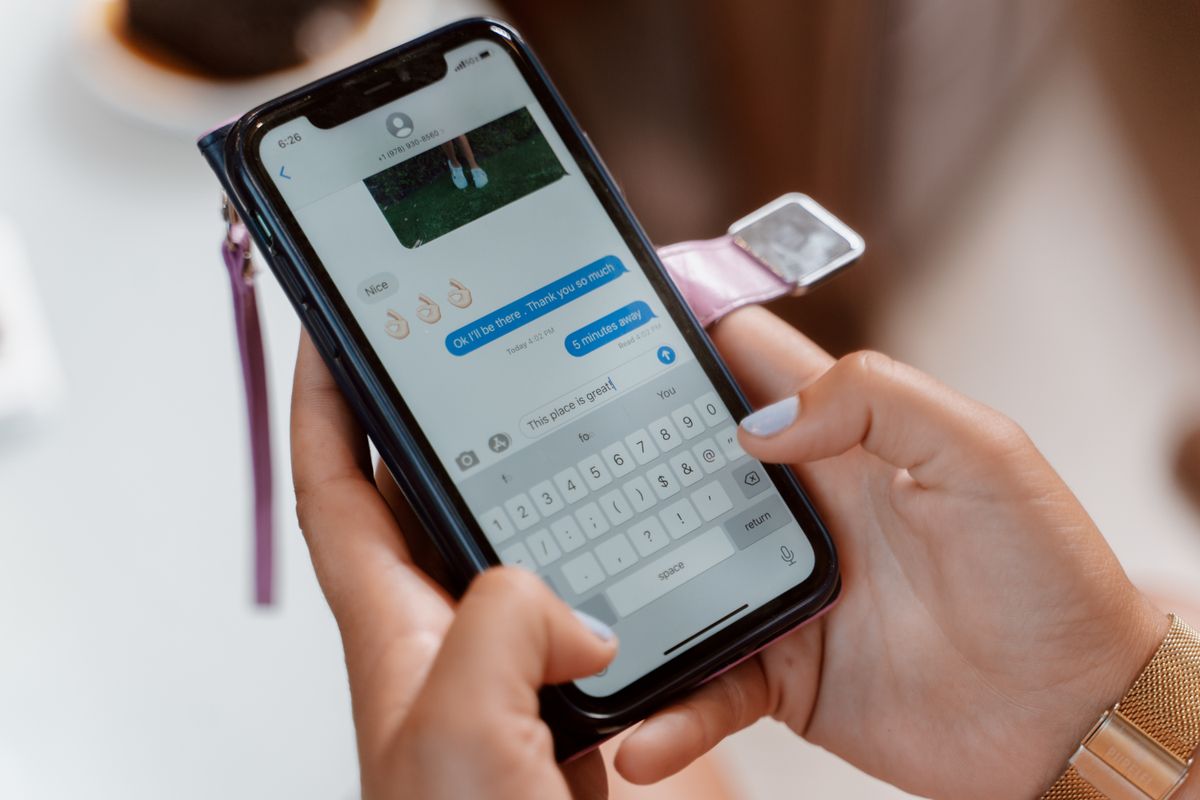
- 3. "Send me details." — "Of course! Here is what is included: [3 short lines]. The price is [range]. Want it on WhatsApp so you have it saved?"
- 4. "Where are you based?" — "We are in [area] and we cover [areas]. If you are in [area], we can come [day]. Shall I check a time for you?"
- 5. "Can I book?" — "Yes! Two quick questions: [date] and [time]? Once you confirm, I will send the booking to your WhatsApp."
- 6. "Is this real?" — "Totally fair question! Here is a recent job we did: [photo/link]. And here is what a customer said: [one-line review]."
Then move the conversation to WhatsApp, where buying actually happens — prices, photos, bookings and payment screenshots. The free WhatsApp Business app covers most needs: a business profile, a catalogue, quick replies, labels, and greeting and away messages. See the StoreFries and WanzieSend WhatsApp marketing guides.
Two warnings from November 2026. Meta's own Business Agent (announced June 2026) now answers customers in your business's name on WhatsApp and Messenger — that is the official route. Never link your number to an unofficial third-party AI app: in early November 2026, users of one such app reported their numbers being banned.

UGC ads for small business: real people beat studio polish
One more lever makes the Reels in Step 3 more effective. UGC ads for small business — ads that look like a real customer filmed them on a phone, not a studio commercial — have gone from niche to default. UGC campaigns grew 133% in a year and now make up 35% of all influencer campaigns (Collabstr 2026, 21,000+ collaborations).
UGC drove 29% higher conversions than non-UGC campaigns (Adweek, via Collabstr). UGC-style creative ran 27–64% ahead on click-through and 19–26% ahead on conversion and cost-per-acquisition versus studio work (Talentir, September 2026). UGC video ads get four times the click-through rate and up to 50% lower cost per click (Influee, July 2026). Trust: only 38% are comfortable with a creator review generated entirely by AI, and 43% say they now rely more on real people (Gartner, September 2026).
What does it cost? A median of $150 per short-form video across 154 advertised briefs (Pitchlo, measured 3 October 2026). Nano creators typically charge $50–$150 per video and micro creators $150–$350 (Sphynxify, April 2026). Nano creators also win on engagement — 2.61% on average versus 0.84% for mega creators (Talentir, September 2026). Your own UGC is free: film your process and results on a phone — exactly what Step 3 teaches. See What makes a UGC ad actually sell?

Local SEO for small business: get found when locals search
Instagram brings you customers who scroll. Local SEO for small business brings you customers who search — someone typing "salon near me" has already decided to buy.
The front door is your Google Business Profile — the free listing on Google Maps and in "near me" searches. In 2026, Google's AI answers handle "near me" queries directly: getting cited needs a top-five rank, a complete profile, a 4.3+ star rating, and FAQ and LocalBusiness schema. Yet only 35% of small businesses even have one (BrightLocal).
Three things matter most. First, complete the profile: the exact service and area in the business name, correct hours and every service listed. Second, win on review velocity, not just volume: 47% of searchers will not use a business with fewer than 20 reviews, and 74% only care about reviews from the last three months (BrightLocal, 2026). Third, answer local questions on your website: one page per service and area, with FAQ schema. 46% of Google searches have local intent (BrightLocal, 2025). See the iWeb, dev.to, WebWave and Search Engine Geeks guides. DigiTera's Web & SEO service builds this.
What to post each week (a plan you can actually keep)
Three to four feed posts a week is enough. Our guide to turning one video into a week of content shows how.
| Day | What to post | Format |
|---|---|---|
| Monday | One practical tip customers ask about most | Reel, 15–30s |
| Tuesday | Behind the process — hands at work, no script | Reel or Story |
| Wednesday | Stories only: a poll, a question box, a customer's Story (with permission) | Stories |
| Thursday | Transformation or result reveal | Reel + carousel |
| Friday | Direct answer to the week's most-asked question | Reel, 20s |
| Saturday | Customer story or review | Carousel or Reel |
| Sunday | One Trial Reel test of next week's best idea | Trial Reel |
This guide lands before Black Friday (27 November) and Small Business Saturday (28 November 2026). Holiday ad costs routinely rise 30–50% from October to December — organic Reels and UGC are never cheaper than right now.
How to know it's working (ignore likes)
Likes are the wrong scoreboard. Four numbers matter: sends per reach, profile visits, DM conversations started, and enquiries received — the only number that pays. Track it weekly: DMs turned into a quote, a booking or a sale.
Be honest about timing. The first enquiries can arrive in days if your replies are fast, but steady customer flow takes 2–3 months, with the compound effect at 3–6 months (StoreFries). Anyone promising customers in a week is selling you something. Do not buy followers or join engagement pods.
FAQ
How long does it take to get customers from Instagram?
First enquiries in days to weeks if you reply fast; steady flow in 2–3 months, the real effect at 3–6 months.
Do I need a lot of followers first?
No. Instagram shows Reels mostly to non-followers, and Trial Reels test on strangers first.
Do I need to run ads to get customers from Instagram?
No. This system is organic: profile, Reels, Trial Reels and fast replies. Boosting optimises for likes, not enquiries. If you do spend, use Ads Manager.
How many times a week should I post?
Three to four feed posts a week is enough, with Stories daily and one Trial Reel test a week.
Can I get enquiries from Instagram without showing my face?
Yes. Hands-only process videos, before-and-after reveals and customer-voice clips all work without a face on camera.
Is it better to post Reels or carousels in 2026?
Both have a job. Carousels lead on engagement (0.50% vs 0.48%, Socialinsider, October 2026), while Reels lead on reach.
Want the reels and the reply system done for you?
That is what DigiTera does: Reels and UGC-style ads people send, a profile that sells, and a DM-to-WhatsApp system that answers fast. Tell us about your business and we will send you a clear scoped quote — no fixed packages, no obligation. Or message us on WhatsApp right now.
Sources & further reading: Kicks Digital Marketing — Instagram's 2026 Repost Penalty · Webeesocial — Instagram Reels Algorithm 2026 · Instagram Trends November 2026 · Creatorflow — Instagram Trends · Collabstr 2026 Influencer Marketing Report · Talentir — The New Wave of UGC · Influee — UGC Trends · Pitchlo — How Much Does UGC Cost? · Sphynxify — How Much Does UGC Actually Cost in 2026? · LeadResponse — How to Get More Clients From Instagram in 2026 · StoreFries — WhatsApp Marketing for Small Business · WanzieSend — WhatsApp Marketing for Small Business · iWeb — Local SEO for Small Business: 2026 Guide · dev.to — Local SEO Checklist for Small Businesses · WebWave — Local SEO for Small Business: The Complete 2026 Guide · Search Engine Geeks — Google Business Profile Local SEO Wins · U.S. Chamber of Commerce — AI Tools for Small Business Marketing · GrowAxis — What Businesses Search: US & Canada 2026. Figures in this post are cited from these sources as published; no statistics, case studies or client results were invented for this article. All photos are illustrative stock photos from Pexels, not DigiTera clients or results.